


Posting a photo of your boarding pass on Instagram, sending your accommodation confirmation in a message, or quickly charging your phone using a public USB port at the airport. These are all perfectly ordinary situations that many people encounter during their summer holidays. However, in the digital world, they can open the door to cybercriminals. The holiday season and the rush that comes with travelling create a very attractive opportunity for attackers to exploit people’s lack of vigilance. Every summer sees a noticeable rise in financial scams, identity theft, and compromised online accounts.
While we are careful to keep our passport and wallet safe in the physical world, we often become far less cautious online. Sharing photos of boarding passes or posting your travel itinerary in real time on social media hands fraudsters valuable information on a silver platter.
People often do not realise that certain details on travel documents should never be shared online, especially not on public platforms. It takes surprisingly little for attackers to piece together who is travelling, where they are going, how long they will be away, and, most importantly, when their home is likely to be empty.
The tactics used by cybercriminals have evolved significantly in recent years. Rather than conducting technical attacks against booking systems, they now combine data profiling, social engineering, and generative AI tools. Using publicly available information, attackers can often determine where someone is travelling, when they are flying and where they will be staying. They then use this information to create messages that appear to come from a hotel, airline, or booking platform.
AI-generated voice messages are becoming increasingly common, allowing criminals to imitate a specific individual or a customer support representative with remarkable accuracy. Shortly before departure, travellers may receive a WhatsApp message, email, or phone call requesting an urgent payment or asking them to verify their payment card details to avoid their booking being cancelled.
In the stress and rush before the trip, most people panic and provide the requested information without thinking twice. The success of these scams depends almost entirely on psychology. Travellers are often juggling multiple tasks at once and tend to make impulsive decisions. Entering sensitive information in haste can unintentionally give criminals access to both their identity and their payment card.
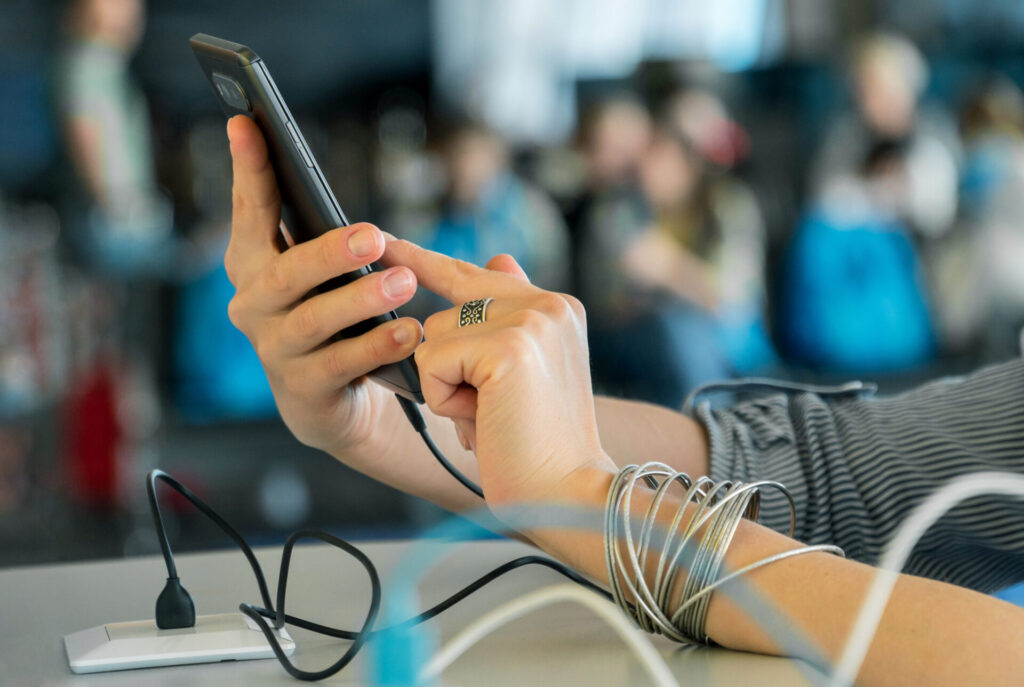
A flat phone battery at an airport or railway station triggers an uncomfortable feeling that we often resolve by plugging our phone into public charging stations. However, a standard USB connection carries not only power but also data. If a charging station is not operated by a trusted provider, data can potentially be transferred alongside the charging process. What appears to be a convenient solution can quickly turn into a security nightmare.
Experts therefore recommend exercising extreme caution. When travelling, a simple rule applies: use your own charger, a power bank, or a simple USB data blocker while charging your phone. From a security perspective, this is the only reliable option.

Travelling often means installing apps that serve a temporary purpose, such as local transport ticketing apps, travel guides or specialist applications for charging electric vehicles abroad. Once the holiday is over, these apps are frequently forgotten and remain installed on your phone.
Many of these apps continue to have access to your location, contacts, or photo gallery. Just as we unpack our bags and wash our clothes after returning, we should also clean up the digital footprint we created during our travels. Deleting unnecessary apps after a holiday takes just a minute, but it helps protect your privacy while also freeing up storage space on your phone.
The biggest threat to digital security while travelling is haste and the urge to share our experiences with the world in real time. A healthy dose of scepticism may be the best souvenir you can bring back from this year’s holiday.
Today, cybersecurity is no longer just a concern for governments, large organisations, or IT professionals. It affects everyone who uses a smartphone, a payment card, or the internet. Unfortunately, holidays are often when people only realise how important digital security is after something has already gone wrong.
We are in the process of finalizing. If you want to be redirected to our old version of web site, please click here.